When should you give your lawn its last mow of the year in Somerset?
In most Somerset gardens the last mow falls between late October and mid-November, once the grass has stopped growing for a week or so. Pick a dry day, raise the blades so you leave the grass a little longer than in summer, clear the leaves first, and keep off the lawn when it is frosted or waterlogged.
When is the last mow of the year in Somerset?
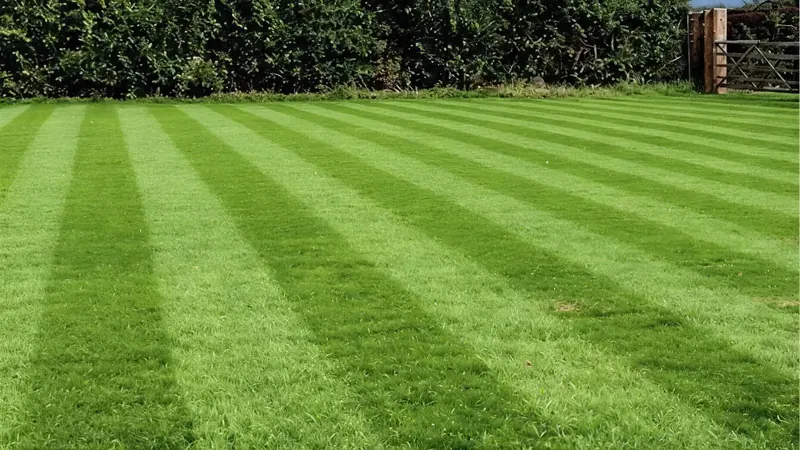
The last mow in Somerset usually comes between late October and mid-November. Grass slows right down as the weather cools, so the signal is growth, not a date: when a week goes by and the lawn has barely grown, give it its final cut on the next dry day, before frosts settle in for the winter.
Somerset is not one climate. The Met Office notes that frost is more frequent in inland, low-lying parts of the county than almost anywhere else in the South West, while the sea keeps the coast milder well into autumn. A lawn on the Levels near Wedmore can stop growing weeks before one in Burnham-on-Sea or Weston-super-Mare.
The first air frost of autumn can be expected about mid October inland in Somerset. The continuing warmth of the sea usually prevents coastal autumn frosts.
- Inland and low-lying (the Levels, valley bottoms): expect to finish nearer late October, sometimes earlier after a cold snap.
- Mendip slopes and higher ground: colder nights and wetter ground, so the window for a dry cut closes early.
- Near the coast (Burnham, Brean, Weston): grass often keeps growing into November, so a final trim may come later.
How short should you cut grass for the winter?
Leave the grass a little longer for winter than you would in summer. For most family lawns a final height of around 4 to 5 cm works well, with shady patches left longer. Raise the mower a notch rather than scalping it: longer grass copes better with frost, wet and the odd footstep until spring.
The old rule still holds: never take off more than about a third of the leaf in one cut. If the lawn has got long during a wet October, bring it down in two cuts a few days apart instead of one hard one. Cutting too short in autumn leaves bare, weak patches that moss and weeds move into over winter, and there is no growth to repair them until spring.
| Part of the lawn | Suggested final height | Why |
|---|---|---|
| Open, sunny lawn | About 4 to 5 cm | Long enough to stay healthy, short enough not to flop and rot |
| Shady areas under hedges or trees | A little longer, about 6 cm or more | Less light, so the grass needs more leaf |
| Paths and heavily used routes | Same as the main lawn | Cutting shorter here only makes worn patches worse |
These are general practice, not fixed rules. Fine ornamental lawns are often kept shorter; a rougher lawn on a farm or holiday let can be left longer.
What should you do with autumn leaves on the lawn?
Clear fallen leaves off the lawn before the last mow and keep clearing them through the winter. A thick layer blocks light and holds moisture, which yellows the grass and invites moss. Do not bin or burn them all: rake them into a pile in a quiet corner, where wildlife can shelter in them.
On a dry day a mower with a grass box will pick up a light covering of leaves along with the clippings, which saves raking. Wet, matted leaves are better raked by hand; running a mower over them tends to clog the deck and smear them into the grass.
If you have any dead wood in your autumn garden, or if you’re already sweeping up rust coloured leaves, gather them into a pile in a corner of your greenspace – again insects and small mammals, including our struggling hedgehogs, will thank you for creating a snug home for them.
Keep the leaf pile off the lawn itself and away from paths you will need over winter. If you ever plan a bonfire, check any pile for hedgehogs before you light it, or better, build the bonfire on the day you burn it.
Should you mow or walk on a frosted or waterlogged lawn?
No. Frozen grass blades snap when they are trodden on, and the damage shows as brown footprints a few days later. Waterlogged lawns are just as easily hurt: feet and mower wheels squash the soil, leaving ruts and compacted patches that drain even worse. On wet Somerset clay, wait until the ground is firm.
This matters more on the Levels than almost anywhere else in the county. The Met Office describes the Levels as lying just above sea level, and much of the ground there is heavy clay that stays soft for days after rain. It also records that South West rainfall peaks in December and January, and that the Mendip Hills get more than 1,100 mm a year, so winter lawns on and below Mendip are rarely bone dry.
| What you see | Mow? | What to do instead |
|---|---|---|
| White frost on the grass | No | Wait until it has fully thawed and the grass has dried, often by early afternoon |
| Water pools or the ground squelches underfoot | No | Keep off it; lay a board if you must cross it |
| Grass wet with dew or rain, ground firm | Better not | Wait for a drier day; wet grass tears and clumps |
| Grass dry, ground firm, some new growth | Yes, on a high setting | A light trim only |
How do you get the mower ready for winter?
After the last cut, clean the mower, check the blade and store it somewhere dry. Scrape packed grass from under the deck, wipe it down, and look at the blade: a blunt or chipped one tears grass rather than cutting it. Follow the maker's handbook for fuel and battery storage over the winter months.
- Disconnect the spark plug or remove the battery before you touch the blade.
- Clear clippings from the deck, grass box and wheels so they do not rust or rot over winter.
- Have the blade sharpened or replaced before spring, not during the first busy week of April.
- Check the handbook on petrol: some makers advise running the tank dry, others a fuel stabiliser.
- Store cordless batteries indoors, part charged, away from frost.
Doing this now means the first spring cut, usually in March or April once the grass is growing again, is a clean one.
Questions people also ask
Can I mow my lawn in November?
Yes, if the grass is still growing, the lawn is dry and the ground is firm. Many Somerset lawns, especially near the coast, get a last cut in November. Use a high setting and skip it if there is frost or standing water.
Does grass grow in winter in Somerset?
Very little. Growth slows to almost nothing in cold weather, but a mild, wet spell can start it again for a while. If that happens, a light trim on a dry day with firm ground is fine.
Is it bad to leave the grass long over winter?
Slightly longer than summer height is good for the lawn. Very long grass can flop over, hold wet and go patchy, so give it a final cut to around 4 to 5 cm rather than leaving it uncut from September.
Should I leave grass clippings on the lawn in autumn?
It is better to collect them at this time of year. Clippings break down slowly in cold, wet weather and can sit on the surface in clumps. Collect them on the last cut and add them to a compost heap.
Can you do a one-off last cut for me?
Yes. We mow lawns one-off or on a regular basis around Axbridge, Cheddar and nearby, and we leave the garden tidy when we go. Send a photo of the lawn by WhatsApp and we can often quote from that first.
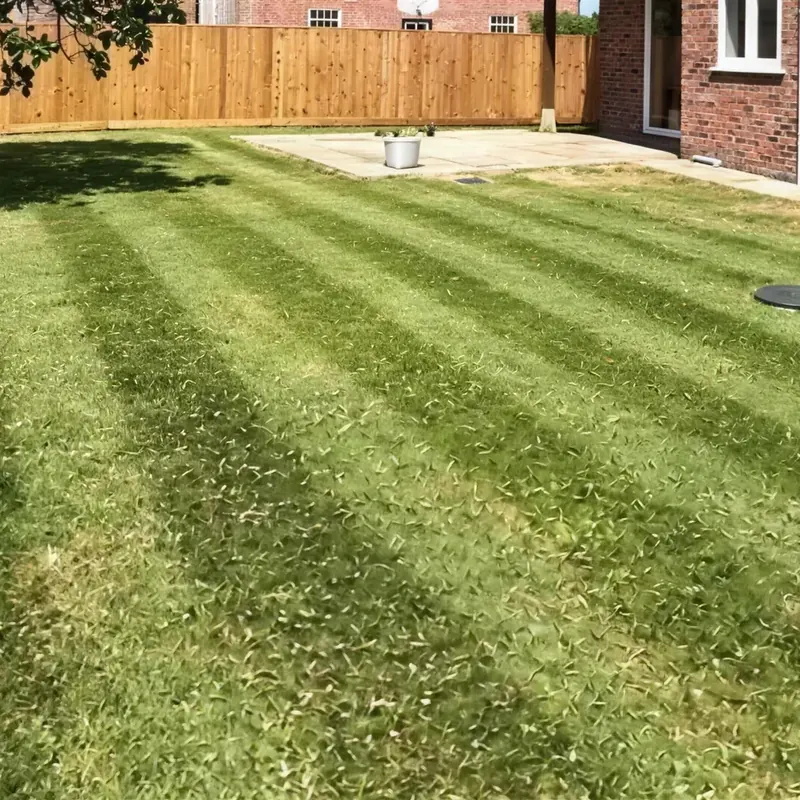
Lawn mowing from a family business near Axbridge
If you would rather someone else gave the lawn its last cut, we mow lawns one-off or regularly within about 10 to 15 miles of Axbridge and leave everything tidy.
We mow lawns, one-off or regular, in and around Burnham-on-Sea. More on fencing and garden work in Burnham-on-Sea.
Sources
- Met Office: South West England: climate (regional climate profile, PDF), accessed 23 October 2026
- RSPB: Less is more this autumn (10 Oct 2025), accessed 23 October 2026
Rules and wildlife law are quoted from the official pages above. This guide is general advice; check the source for your own situation.