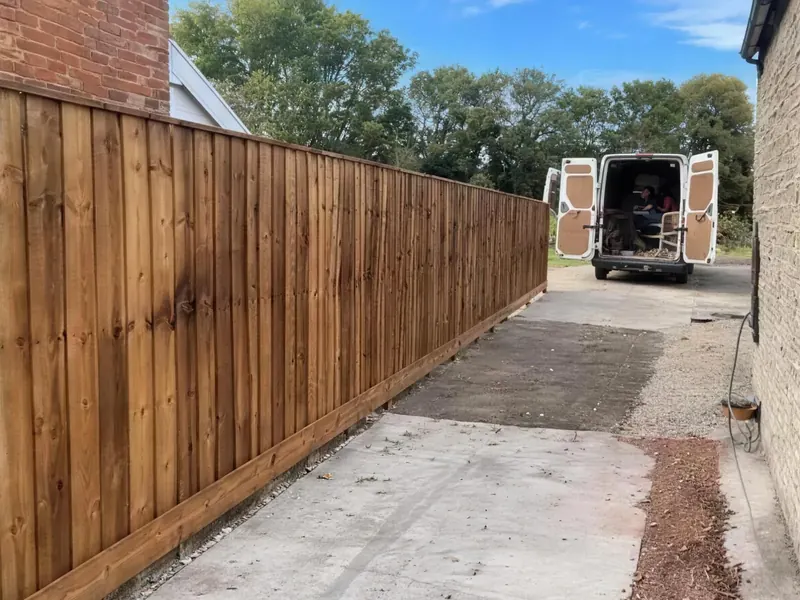
How high can a fence be, and who owns the boundary?
In England you can usually put up a fence up to 2 metres high without planning permission, or up to 1 metre next to a road used by vehicles or its pavement. Listed buildings, some estates and conservation areas change that. Who owns a boundary fence is set by your deeds, and often nobody has recorded it.
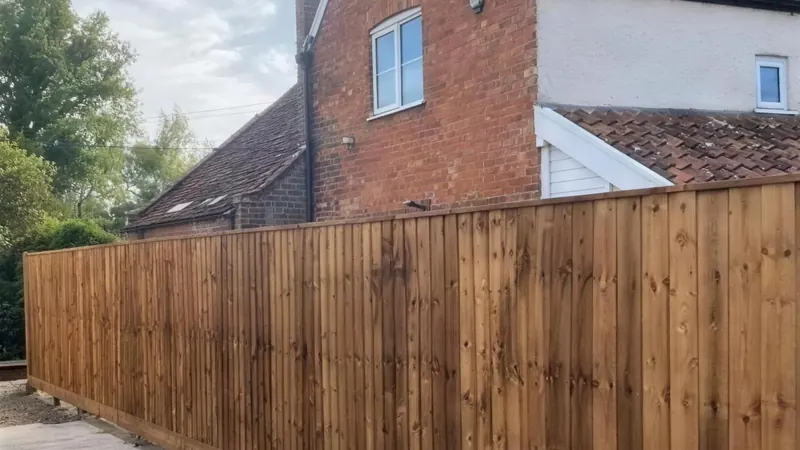
What is the maximum height for a fence in the UK?
In England, a new or replacement fence, wall or gate can be up to 2 metres high, measured from ground level, without planning permission. Next to a road used by vehicles, or the pavement of that road, the limit drops to 1 metre. Anything taller needs a planning application to the council, which here is Somerset Council.
it is next to a highway used by vehicles (or the footpath of such a highway) and it would not exceed one metre in height (from ground level); or it would not exceed two metres in height (from ground level) if elsewhere
| Where the fence stands | Highest without planning permission |
|---|---|
| Back or side garden, not beside a road | 2 metres from ground level |
| Next to a road used by vehicles, or its pavement | 1 metre from ground level |
| Replacing a fence already taller than these limits | No higher than the existing fence |
| Listed building, or the boundary with one | Planning permission needed at any height |
This is what people mean by the 2 m fence rule. It comes from Class A of Part 2 of the permitted development rules, and it covers walls and gates as well as fences. Wales has its own policy, so these figures are for England.
Does the 1 metre rule apply to a front garden?
Only where the fence is next to a road used by vehicles or the pavement alongside it, which in most front gardens it is. The planning rule is written around the highway, not the word front. A front boundary on a private drive or a shared green, away from any road, falls under the 2 metre limit instead.
The legal wording is "adjacent to a highway used by vehicular traffic". Many cottages and farmhouses around Axbridge and Wedmore sit straight onto a lane, so the 1 m limit can apply to a side or back boundary too if it runs along the road.
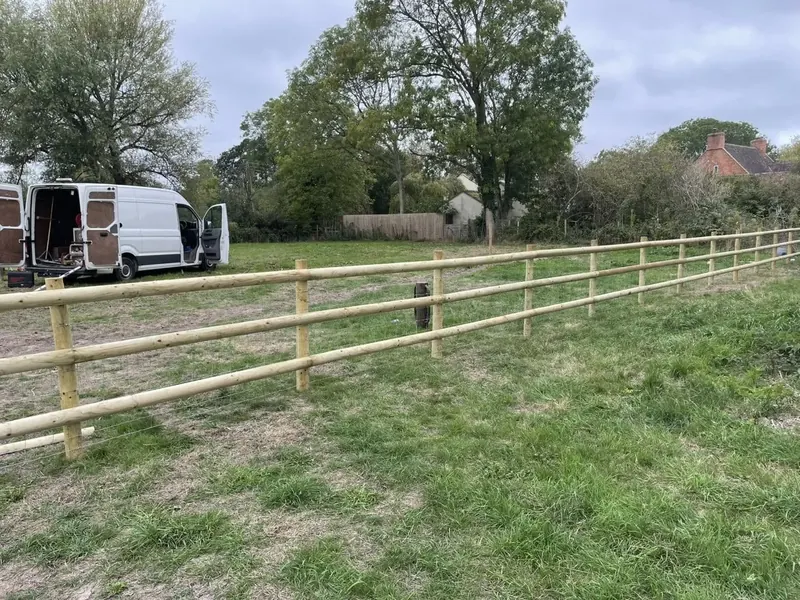
Paddocks and fields are no different on paper: the same Class A limits cover any gate, fence or wall. If you want a post and rail fence along a lane at more than 1 m, check with Somerset Council first how the rule applies to your field.
When do you need planning permission for a fence at any height?
You need permission whatever the height if the property is a listed building or within its grounds, if the fence forms a boundary with a neighbouring listed building, or if an Article 4 direction or a planning condition has removed the right to put up fences. In a conservation area, taking an old fence down can need consent too.
- Listed buildings: check the National Heritage List on Historic England's website. A boundary shared with a listed neighbour counts.
- Article 4 directions and planning conditions: some estates carry conditions on front boundaries. Somerset Council can tell you if one applies.
- Covenants in your deeds: the Planning Portal notes these may need someone else's agreement "even if you do not need to apply for planning permission".
- Conservation areas: Axbridge and Wedmore both have one, designated in 1991 according to the government's planning data.
To demolish any gate, fence, wall or other means of enclosure with: a height of one metre or more if next to a highway (including a public footpath or bridleway), waterway or open space; or a height of two metres or more elsewhere
Can my neighbour put up an 8ft fence?
Not without planning permission. Eight feet is about 2.4 metres, which is over the 2 metre limit for a fence anywhere in a garden, so your neighbour would need to apply to Somerset Council. You can comment on the application once it is published. A fence over 2 metres put up without permission can be reported to the council.
A tall evergreen hedge is a different matter. If two or more mostly evergreen or semi-evergreen trees or shrubs grow over 2 metres and spoil your enjoyment of your home or garden, gov.uk says you can ask the council for a high hedge complaint form, once you have tried to settle it informally. A fee may apply.
Who owns the fence between two houses in the UK?
Often nobody knows for certain. Gov.uk says that in England and Wales there is usually no record of the exact boundary or of who owns the fence between two properties. Your deeds may say, often with T marks. If they do not, HM Land Registry treats the fence as shared and expects both owners to agree any changes.
There are various notions that the way a wall or fence is constructed indicates ownership, for example that the posts and arris rails of a fence are on the owner's side. There is, however, no legal foundation for such beliefs.
Where the ownership or responsibility for maintenance of a boundary cannot be determined, that boundary feature is generally best regarded as a party boundary. Any alterations or replacement of the boundary should only be done with the agreement of the adjoining owners.
Where to look, in order:
- Your title plan and register, which you can get online from HM Land Registry.
- Older deeds or a builder's transfer plan, for T marks referred to in the wording. HM Land Registry says T marks not mentioned in the text of the deed have no special force in law.
- Covenants to maintain a fence. These say who looks after it but do not, on their own, make that person the owner.
What are the rules for boundary fences and neighbours?
Talk first. Gov.uk says most boundary questions can be settled with an informal chat, and you and your neighbour can then write a boundary agreement recording where the line runs and who maintains the fence. It does not change who owns the land. For a disagreement, gov.uk points to the RICS helpline scheme and legal advice.
- A boundary agreement records the line and who maintains the hedge, wall, tree or fence. It can be noted on both titles with HM Land Registry.
- A determined boundary records the exact line. It needs a plan from a chartered land surveyor and may go to a tribunal if your neighbour objects.
- You can trim branches or roots that cross onto your property, but only up to the boundary (gov.uk).
Before a new fence goes in, a short conversation with the neighbour about the line, the height and which way the boards face saves most arguments. No planning rule says which way a fence must face. Facing the smooth side outwards is a courtesy many people choose, and putting a new fence wholly on your own side of the line keeps ownership clear.
Do you need consent to fence next to a rhyne or ditch in Somerset?
Often, yes. Across much of the Somerset Levels and Moors, the drainage boards' rules cover any work within 9 metres of a watercourse, and that includes fences. Rhynes, ditches and drains all count as watercourses. Work by a main river needs Environment Agency consent instead, so check which applies before posts go in.
Within 9 Metres of a Watercourse: Includes buildings, roads, fences, trees, and any structure affecting the 9M easement either side of a watercourse.
The consortium says complete applications go through a 60-day consultation, and that working without consent is a criminal offence. Around Axbridge, Cheddar and Wedmore, plenty of paddocks and gardens back onto a rhyne, so it is worth checking early.
Ditches also matter for ownership. HM Land Registry describes a long-standing legal presumption that where a hedge or bank sits beside a man-made ditch, the boundary runs along the far edge of the ditch from the hedge. Deeds or other evidence can override it.
What should you check before a new fence goes up?
Five things: the height against the 2 metre and 1 metre limits, whether the property is listed or in a conservation area, what your deeds say about the boundary, whether a rhyne or ditch is within 9 metres, and what your neighbour thinks. Sorting these before a quote means the fence you price is one you can build.
Questions people also ask
Does trellis on top of a fence count towards the 2 m limit?
The Planning Portal measures height from ground level, so trellis fixed to the top of a fence adds to it. If a fence plus trellis would go over 2 metres, or over 1 metre beside a road, ask Somerset Council's planning team before fitting it.
Can I replace an old fence at the same height without permission?
Usually, yes. The Planning Portal says that if an existing fence already exceeds the limits, you can maintain or replace it as long as its height is not increased. Listed buildings, conservation areas and Article 4 directions still apply.
Do I need my neighbour's permission to put up a fence on my own land?
Planning rules do not ask for a neighbour's consent for a fence within the height limits on your own land. If you are replacing a fence whose ownership is unclear, HM Land Registry's guidance is to treat it as shared and agree any replacement with the adjoining owner.
Do I need planning permission for a hedge?
Not as such, according to the Planning Portal. A planning condition or covenant can restrict planting on some estates or where a hedge would block a driver's view, so check your deeds and any planning conditions first.
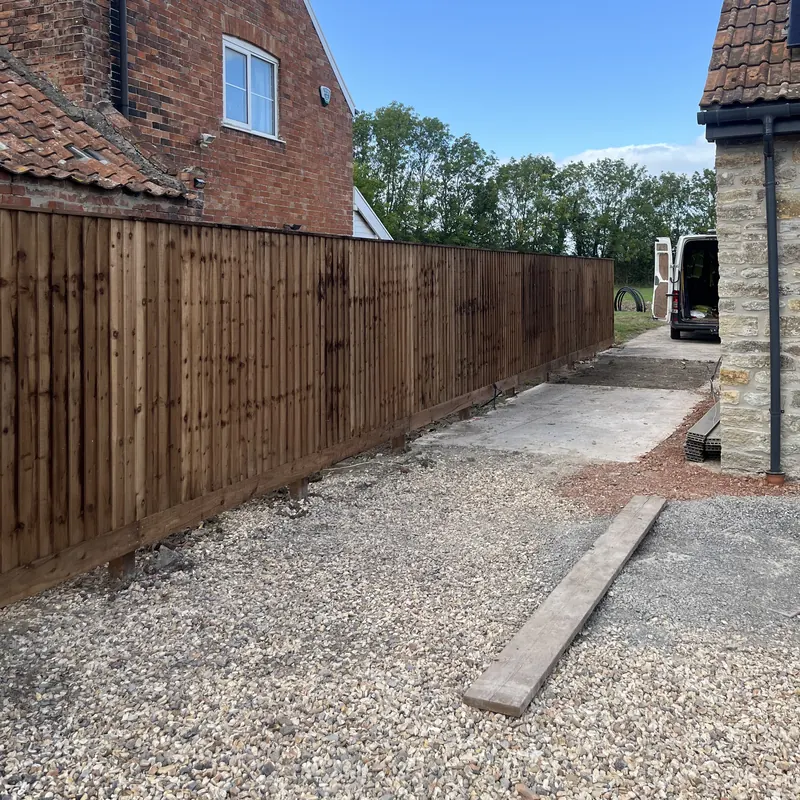
Fencing from a family business near Axbridge
We put up closeboard, post and rail and half-round rail fencing and gates, within a 10 to 15 mile radius around Axbridge and in and around Somerset for fencing jobs; call or WhatsApp 07594 230584 for a free quote, emailed or given on the day.
We put up boundary fencing in and around Wedmore. More on fencing and garden work in Wedmore.
Sources
- Fences, gates and garden walls: planning permission (Planning Portal), accessed 23 October 2026
- The Town and Country Planning (General Permitted Development) (England) Order 2015, Schedule 2, Part 2, Class A (legislation.gov.uk), accessed 23 October 2026
- Conservation areas (Planning Portal), accessed 23 October 2026
- Covenants and private rights (Planning Portal), accessed 23 October 2026
- Your property boundaries (gov.uk, HM Land Registry), accessed 23 October 2026
- HM Land Registry plans: boundaries, practice guide 40 supplement 3 (gov.uk), accessed 23 October 2026
- Resolving neighbour disputes: high hedges, trees and boundaries (gov.uk), accessed 23 October 2026
- Land drainage consent (Somerset Drainage Boards Consortium), accessed 23 October 2026
- Axbridge conservation area (planning.data.gov.uk), accessed 23 October 2026
- Wedmore conservation area (planning.data.gov.uk), accessed 23 October 2026
- Search the National Heritage List for England (Historic England), accessed 23 October 2026
Rules and wildlife law are quoted from the official pages above. This guide is general advice; check the source for your own situation.