What affects the cost of a new fence in Somerset?
There is no honest single price for a new fence, because the job changes from one boundary to the next. The cost comes down to the length and height, the type of fence, the ground the posts go into, access, taking down the old fence, and any gates. Compare quotes on those points, not just the total.
How much does it cost to install a fence in the UK?
It depends on the job more than the postcode. Two fences of the same length in Somerset can be priced very differently, because one is a straight run of post and rail on open ground and the other is closeboard on a slope with two corners, a gate and an old fence to take down first.
Online price lists cannot see your boundary. A fair quote is built from the things below, and knowing them helps you read any quote.
| What drives the cost | Why it moves the price |
|---|---|
| Length | More posts, more timber, more digging. Straight metres are the simplest part of a job |
| Height | Taller fences need longer, heavier posts set deeper, and more boards per metre |
| Fence type | Closeboard, panels and post and rail use very different amounts of timber and labour |
| Ground | Clay, rock, roots, slopes and buried pipes all change how long each post hole takes |
| Access | Materials carried through a house or down a narrow path take longer than a van at the field gate |
| The old fence | Taking it down, pulling old posts and dealing with the timber is work in itself |
| Gates | Each gate needs strong hanging posts, hinges and a latch, and a wide field gate needs more |
| Corners and ends | Every change of direction and every end needs an extra, heavier post |
How much would a 20 or 30 metre fence cost?
A 30 metre fence costs more than a 20 metre one, but rarely one and a half times as much. Some costs stay the same whatever the length, such as getting materials and tools to site. What moves the total most is how many posts the run needs, and that depends on corners, ends and gates as much as length.
A simple way to see it is to count the parts. Ready-made fence panels are usually 1.83 m (6 ft) wide, so a straight run needs one more post than it has panels.
| Example run of 1.83 m panels | Panels | Posts |
|---|---|---|
| 20 m, straight | 11 (the last one cut to fit) | 12 |
| 30 m, straight | 17 (the last one cut to fit) | 18 |
| 30 m with two corners and a gate | Fewer, depending on the gate width | More, with heavier posts at the corners and the gate |
That last row is why two quotes for "30 metres" can be far apart. Ask each fencer how many posts they have allowed for, and where the corners and gates fall.
Which type of fence costs more per metre?
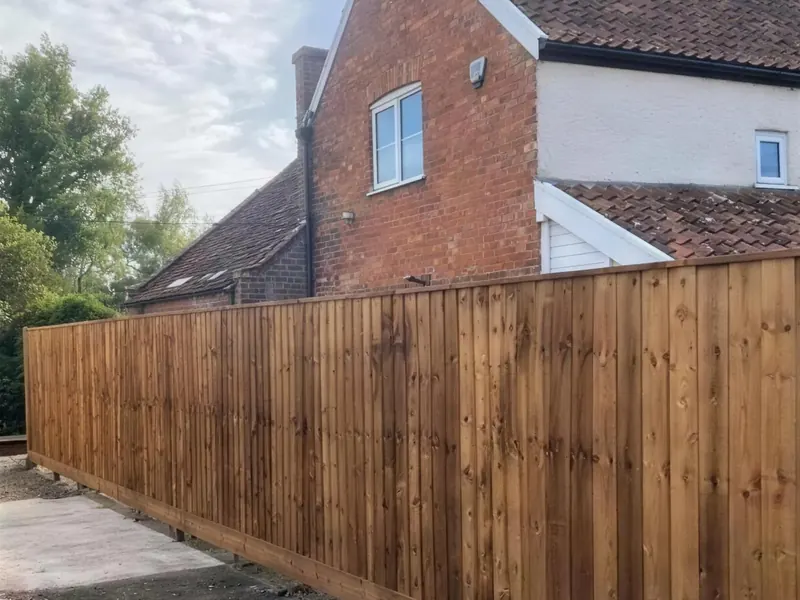
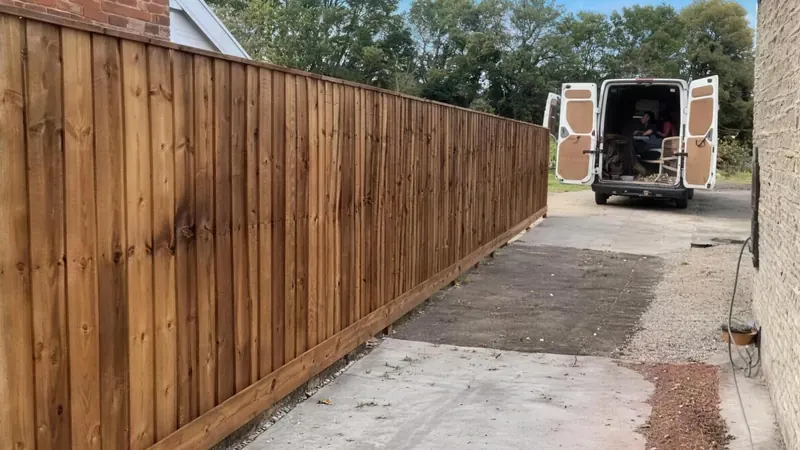
Closeboard usually costs the most per metre of the common garden fences, because it is built board by board on rails between posts. Panel fencing is quicker to put up. Post and rail, with or without stock wire, uses the least timber per metre, which is why it is the usual choice for long field and paddock boundaries.
| Fence type | What goes into each metre | Usually suits |
|---|---|---|
| Closeboard (featheredge boards on rails) | Posts, two or three rails, overlapping boards fixed one at a time, often a gravel board at the bottom | Garden boundaries where you want privacy and strength |
| Panels between posts | Posts and ready-made panels, often with gravel boards | Sheltered gardens and shorter runs |
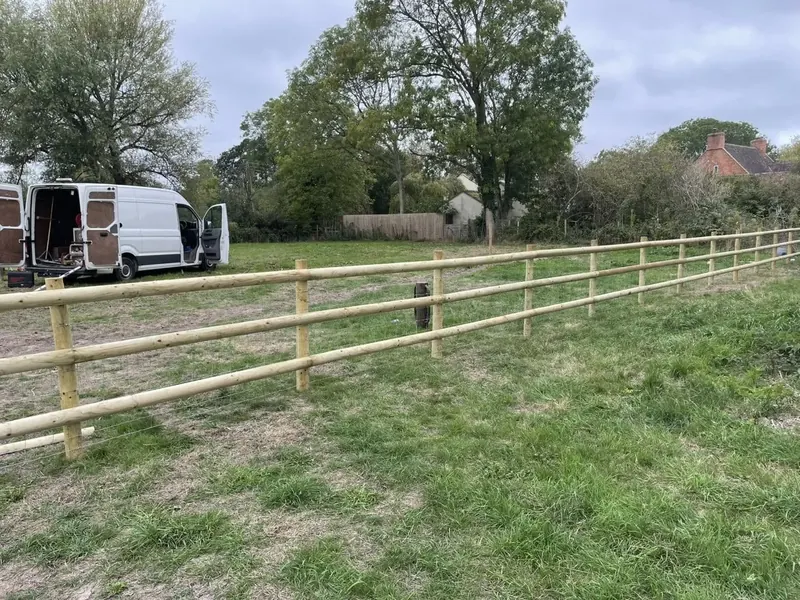
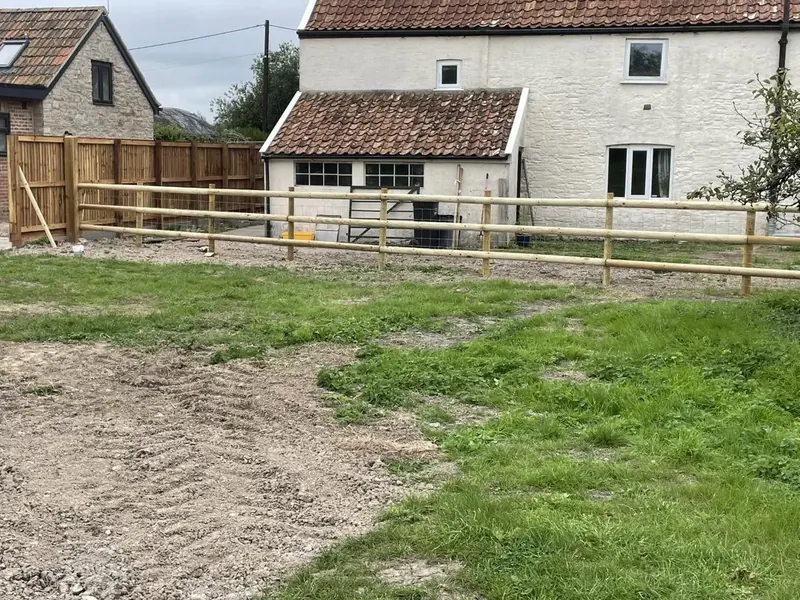
| Post and rail or half-round rail, with or without stock wire | Posts, two to four rails, and wire netting if animals need keeping in | Fields, paddocks, smallholdings and long boundaries |
We put up all three kinds. On the Levels side of Axbridge, recent jobs include 50 m of post and half-round rail with stock wire at Mark, and 45 m of post and rail with a 12 ft field gate at Rooksbridge.
How does the ground change the price of a fence in Somerset?
The ground decides how long each post takes and how deep it needs to go. Around Axbridge you can meet wet clay on the Levels, limestone on the Mendip slopes and exposed ground within a few miles. Each one adds time in a different way, which is why a fencer needs to see the site before giving a firm price.
To the east of Exmoor are the low lying Somerset Levels. This is an area similar to the Fens, which lies just above sea level and in the past was subject to flooding. To the south of Bristol lie the Mendip Hills, which is an area of limestone rocks.
- Wet clay digs easily but holds posts less firmly, so they often go deeper, and holes can fill with water in winter.
- Rocky ground on the Mendip edge can mean breaking through stone for every post.
- Slopes mean stepping panels down the hill or running rails and boards with the ground, and both take longer than a flat run.
- Exposed sites need stronger posts. The Met Office says South-west England is one of the more exposed areas of the UK, with stronger average winds only in western Scotland.
- Tree roots, old concrete and buried pipes or cables slow the digging and sometimes move where a post can go.
What do access, the old fence and gates add?
Access sets how long it takes to get materials to the line. Taking down an old fence is a job before the new one starts, and what happens to the old timber needs agreeing at the quote stage. Gates add strong hanging posts and fittings, and a wide field gate needs the heaviest posts in the run.
If every post, board and bag has to go through a house or along a narrow side path, that is labour you pay for. Open access from a drive, lane or field gate is quicker.
Old fences rarely come out cleanly. Concrete around old posts may need breaking out, and the line may need clearing of brambles or ivy first. We leave the site tidy, but we don't take the old fencing away, so agree up front where the old panels and posts will go. Many people take it to their local recycling centre or hire a skip. If anyone removes waste for you, GOV.UK is clear on what to check:
If you use a private business that provides a waste collection service, you must check the company is on the register of waste carriers.
Gates are priced on their own. A garden gate needs a firm hanging post and a latch post. A 12 ft field gate swings a lot of weight, so its hanging post has to be set to take that load every day.
Do height and planning rules change the cost?
Yes. A taller fence needs longer, heavier posts, more boards and deeper holes. Above 2 m, or above 1 m next to a road used by vehicles or its footpath, you also need planning permission, which adds time and an application. Listed buildings and some conservation areas have extra rules, so check before you order.
it is next to a highway used by vehicles (or the footpath of such a highway) and it would not exceed one metre in height (from ground level); or it would not exceed two metres in height (from ground level) if elsewhere
It also helps to know where your boundary runs before you get quotes, so every fencer prices the same line. GOV.UK notes that in England and Wales there is usually no record of who owns the fence between two properties, and that most title plans do not show exact boundaries. If a neighbour shares the boundary, talk to them first.
How much should I pay a fencer, and how do I compare quotes?
Pay for the job you need, built properly, and compare quotes line by line rather than by the total. Check each one names the fence type, height, posts, gates and who deals with the old fence. A quote from someone who has walked your boundary is worth more than a per-metre figure given over the phone.
- Fence type and height, written down, with the number of posts and what they are.
- How the posts will be set in your ground, and how deep.
- Gravel boards or a gap so boards stay off wet soil.
- Gates: how many, what width, and the hanging posts.
- The old fence: who takes it down and where it goes.
- Whether the price is for the whole job or per metre, and what could change it.
- Insurance: ask whether they carry public liability cover.
Questions people also ask
Is it cheaper to install your own fence?
You save on labour, but you still pay for materials, tool or post-hole borer hire and getting rid of the old fence. The part people most often get wrong is setting the posts, and a leaning fence is costly to put right. A short panel run in a sheltered garden is the most realistic DIY job.
Is post and rail fencing expensive?
Per metre, post and rail is usually the least costly of the common fence types, because it uses less timber than closeboard or panels. Adding stock wire, more rails or field gates adds to it. Over a long boundary, the number of posts and gates matters more than the rails.
Can fence posts be 2.4 m apart?
It depends on the fence. With panels, the posts sit at the panel width, usually 1.83 m. Closeboard and post and rail can have different bay widths depending on the rail lengths and how exposed the site is, so ask the fencer what they plan and why.
Do you charge for a fencing quote?
No. Our quotes are free and with no obligation. For fencing we look at the ground first, then email the quote or give it to you on the day.
Which areas do you cover for fencing?
We cover a 10 to 15 mile radius around Axbridge for every service, and take fencing and decking jobs in and around Somerset. Larger business and farm jobs are on request. Call or WhatsApp 07594 230584.
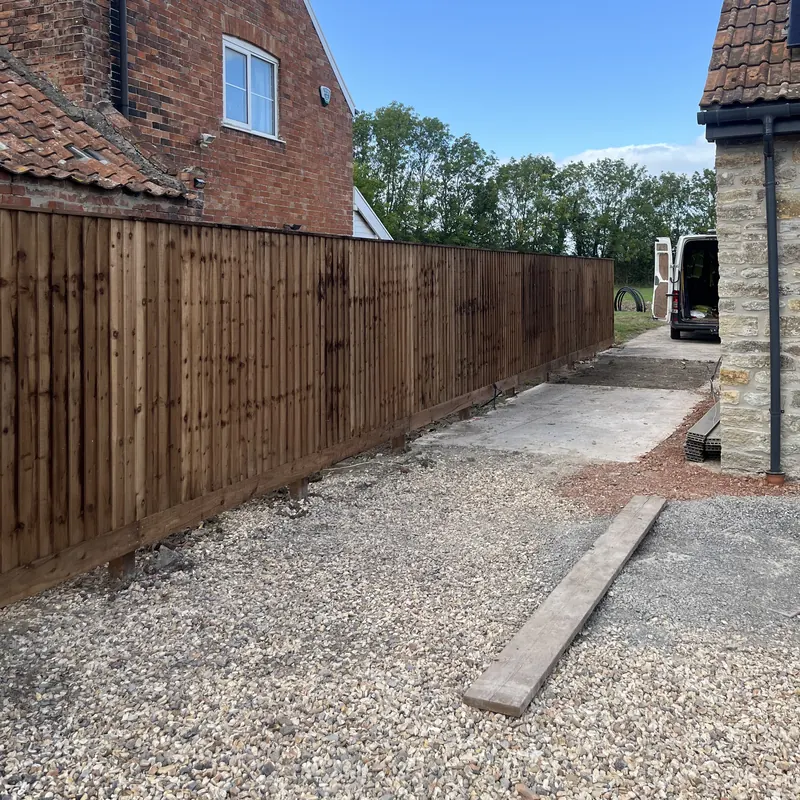
Fencing from a family business near Axbridge
We put up closeboard, panel and post and rail fencing and gates for homes, farms and businesses: a family business near Axbridge since 2006, fully insured. Call or WhatsApp 07594 230584 for a free quote, emailed or given on the day.
We are based near Axbridge. More on fencing and garden work in Axbridge.
Sources
- Planning Portal: Fences, gates and garden walls, planning permission, accessed 23 October 2026
- Met Office: South West England climate (regional climate summary), accessed 23 October 2026
- GOV.UK: Your property boundaries, accessed 23 October 2026
- GOV.UK: Dispose of household waste, accessed 23 October 2026
Rules and wildlife law are quoted from the official pages above. This guide is general advice; check the source for your own situation.