What fence works on wet clay or an exposed site in Somerset?
On wet clay and windy ground the fence that lasts is the one that lets water and wind through. In Somerset that usually means post and rail with stock wire on open or wet land, and closeboard on strong posts where you need privacy. Solid panels on short posts tend to fail first, especially on exposed runs facing south-west.
Why is wet or exposed ground hard on a fence?
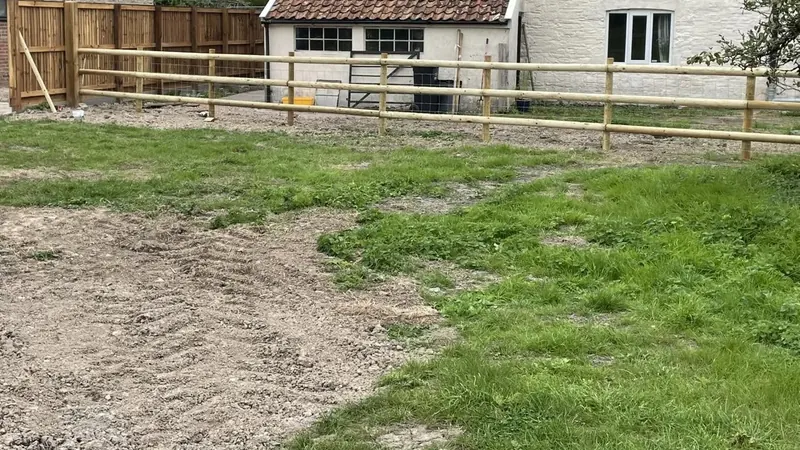
Water and wind attack a fence in different places. On wet clay the posts stay damp at ground level, rot there first and lean as the soil softens. On exposed ground a solid fence acts like a sail, and winter gales lever the posts over. Many Somerset gardens have one problem; some have both.
Around Axbridge you can see both kinds of ground within a few miles: the flat Levels towards Wedmore, Mark and the coast, and the Mendip slopes above the town. The Met Office describes the Levels plainly:
To the east of Exmoor are the low lying Somerset Levels. This is an area similar to the Fens, which lies just above sea level and in the past was subject to flooding.
Low, flat land drains slowly, so water sits in post holes through the winter. Clay adds a second problem: it swells after rain and shrinks as it dries, so a post that was tight in September can be loose by March.
Shrink–swell is the volume change that occurs as a result of changes in the moisture content of clay-rich soils.
Wind is the other half. The Met Office says November to March have the highest mean wind speeds in the region. Higher ground gets more of it, and so does the coast near Burnham-on-Sea and Weston-super-Mare.
Which fence suits wet clay on the Somerset Levels?
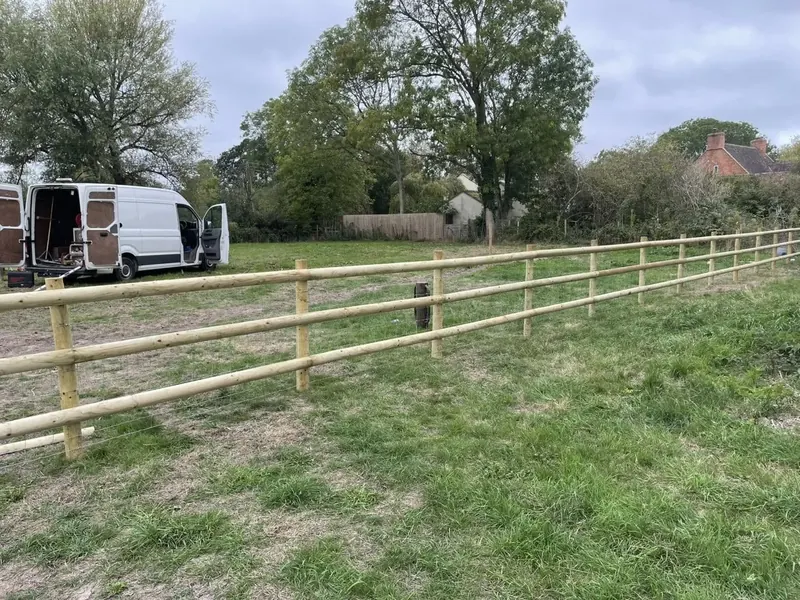
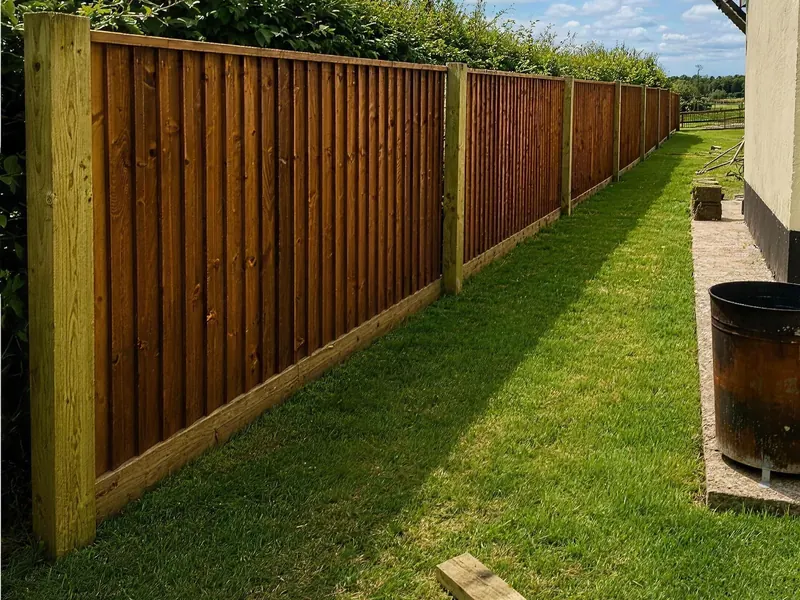
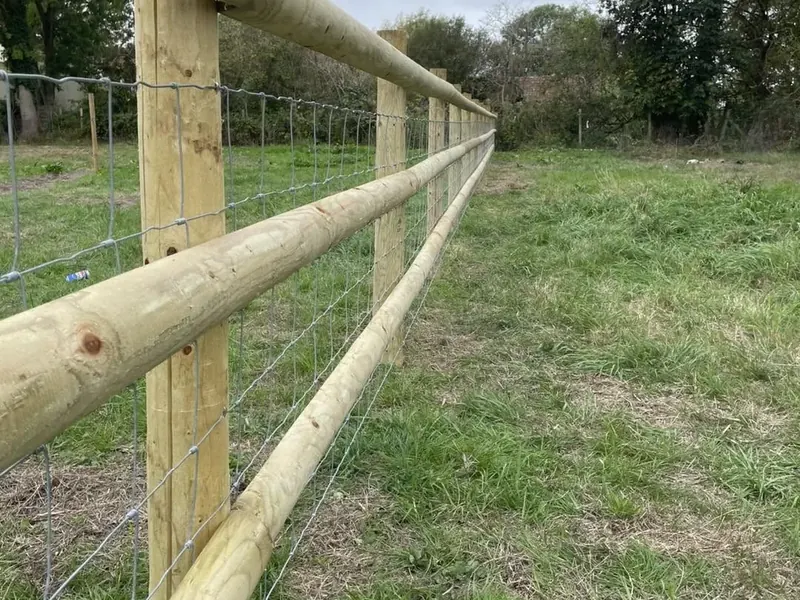
For fields, paddocks and long boundaries on wet ground, post and rail or half-round rail with stock wire is the usual choice. It has fewer posts than a solid fence for the length, puts little load on each one and does not trap water against boards. Where you need privacy, closeboard on well-set posts lasts longer than panels.
| Fence type | On wet clay | On an exposed site | Best for |
|---|---|---|---|
| Post and rail, or half-round rail with stock wire | Light load on each post; nothing holds water against the boards | Wind passes straight through | Fields, paddocks, smallholdings, long boundaries |
| Closeboard (featheredge boards on rails) | Heavier, so the posts must be set well; boards can be kept clear of the soil | Solid, so it takes the full force of the wind; strong posts and rails matter | Garden boundaries where you want privacy |
| Ready-made panels between posts | Panel bottoms can sit in wet soil and rot | Panels catch the wind and can pop out of their slots or snap posts | Sheltered gardens with drier ground |
We put up both of the first two types. Jobs we have done on the Levels side of Axbridge include 50 m of post and half-round rail with stock wire at Mark, and 45 m of post and rail with a 12 ft field gate at Rooksbridge.
Whatever the fence, keep timber out of standing water. Common practice on wet ground includes posts treated for ground contact (often sold as Use Class 4), a gravel board or gap so boards stay off the soil, and running the line along slightly higher ground where the boundary allows.
What fence stands up best on an exposed or windy site?
On an exposed site a fence that lets some wind through usually outlasts a solid one. Post and rail with stock wire hardly notices a gale. If you need screening, closeboard on stout posts copes better than panels, and a design with small gaps between boards takes less load than a solid face.
The Met Office notes that winds in the region usually start from the south or south-west as a depression arrives and swing to the west or north-west as it moves away, and that the strongest winds nearly always blow from that range. So the stretch of fence facing south-west to north-west is the one to plan around.
- Walk the boundary on a windy day and note which runs take the brunt and where gusts funnel between buildings.
- Ask if a slatted or gapped design would give enough privacy on the worst-hit run.
- On open ground, a post and rail boundary with a hedge planted behind it gives shelter over time without a solid face.
- A wide gate on an exposed run needs a properly set hanging post, because the wind swings the gate on it every day.
How deep should fence posts go in soft or wet ground?
As general practice, fencers often put about a quarter to a third of a post's length in the ground, and go deeper where the soil is soft, wet or exposed to wind. The right depth for your boundary depends on the ground, the fence height and the wind, so it is set on site, not from a chart.
A rule of thumb you will often see is roughly 600 mm in the ground for a fence around 1.8 m tall. Treat that as a starting point only: wet clay grips a post less firmly than dry ground, and a tall solid fence on an open site strains its posts far more than post and rail in a sheltered field.
- Soft or waterlogged ground: posts usually go deeper, and how the hole drains matters as much as depth.
- Corners, ends and gate posts carry the most strain and are normally the heaviest posts in the run.
- How posts are fixed (rammed, set in concrete or packed with hardcore) varies by fencer and by ground. Ask what will be used and why.
Can you put a fence up in a Somerset winter?
Yes, most winter days are fine for fencing, and winter shows you exactly where water lies and which way the wind hits. The days to avoid are when the ground is frozen hard or so waterlogged that holes fill as they are dug. A good fencer will move the date rather than set posts in standing water.
A run that looks fine in August can sit in a puddle in January, and that is where the posts will fail first. If you are planning a fence for spring, take a few photos of the ground after heavy rain this winter, so you can show whoever comes to look where the water sits.
Frost matters too: the Met Office records more than 50 air frosts a year on average in inland low-lying spots in Somerset.
Do you need planning permission for a taller fence on a windy site?
Usually not, as long as the fence stays within the standard height limits: 2 m from ground level in most places, or 1 m next to a road used by vehicles or its footpath. Anything taller needs planning permission. Listed buildings and some other sites have extra rules, so check before building.
it is next to a highway used by vehicles (or the footpath of such a highway) and it would not exceed one metre in height (from ground level); or it would not exceed two metres in height (from ground level) if elsewhere
What should you ask a fencer about wet or windy ground?
Ask how they will stop the posts rotting at the soil line, how deep the posts will go on your ground, how they will deal with the run that takes the wind, and whether a different fence type would suit the site better. A fencer who looks at your ground before answering is a good sign.
- Which fence type would you choose for this ground, and why?
- What posts will you use, how are they treated and how deep will they go?
- How will you keep boards or panels off wet soil?
- Which stretch takes the wind, and what will you do differently there?
Questions people also ask
What is the best fence for a waterlogged garden?
One with few posts, timber treated for ground contact and nothing holding water against the boards. On open ground that is often post and rail with stock wire. For privacy, closeboard on well-set posts with the boards kept off the soil lasts longer than panels sitting in wet ground.
Will a solid fence survive winter gales in Somerset?
It can, but it needs strong posts set deep enough for the ground, and it will always take more strain than an open fence. Panels on light posts are the most common failure after a storm. On exposed runs, consider closeboard on heavier posts or a design with gaps.
Do you repair storm-damaged fences?
If a run has been flattened or the posts have gone, we can quote to replace it. If a tree has come down across a fence, have it made safe by a qualified tree surgeon first.
Do you put up fencing outside the Axbridge area?
Yes. We cover about 10 to 15 miles around Axbridge for every service, and take fencing and decking jobs further across Somerset, Taunton included. We do not work outside Somerset.
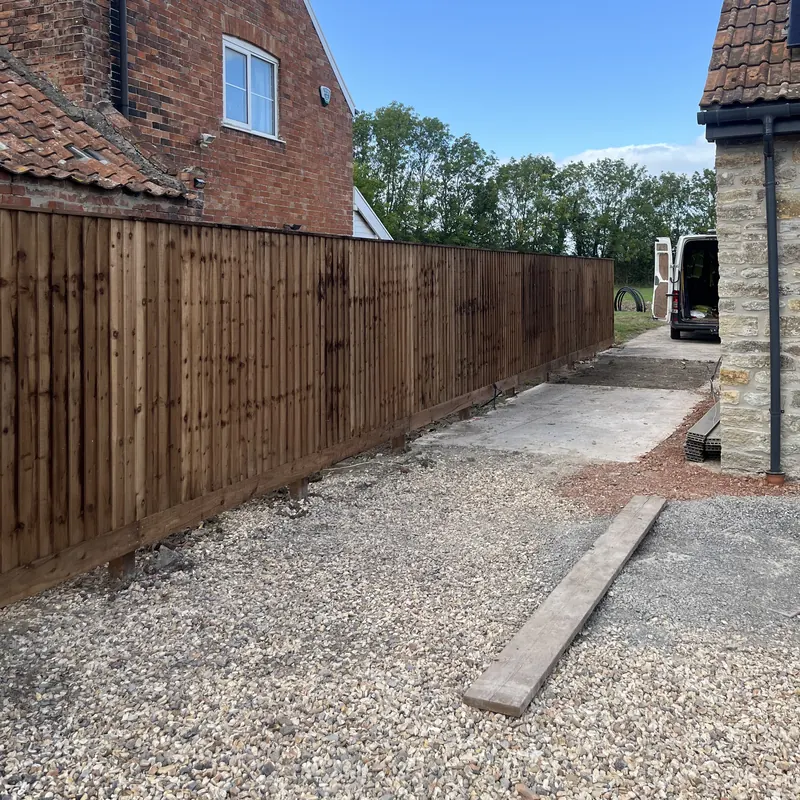
Fencing from a family business near Axbridge
We put up post and rail, half-round rail with stock wire, closeboard fencing and gates around Axbridge, Cheddar and Wedmore, and fencing jobs further across Somerset; call or WhatsApp 07594 230584 for a free quote, emailed or given on the day.
Mark sits on the wet Levels clay this guide talks about. More on fencing and garden work in Mark.
Sources
- Met Office: South West England climate (regional climate summary, PDF linked from the regional climates index), accessed 23 October 2026
- Met Office: UK regional climates index, accessed 23 October 2026
- British Geological Survey: Swelling and shrinking soils, accessed 23 October 2026
- Planning Portal: Fences, gates and garden walls, planning permission, accessed 23 October 2026
Rules and wildlife law are quoted from the official pages above. This guide is general advice; check the source for your own situation.