How do you get a fence through a Somerset winter of gales?
Most fences that come down in a gale fail at the posts, not the boards. Before the winter storms arrive, walk the whole run, push every post, look for soft or rotten timber at ground level and clear anything leaning on it. On an exposed site, a solid fence takes the full force of the wind.
When are gales worst in Somerset, and which way do they come from?
In the South West, Somerset included, the strongest winds come between November and March, when deep Atlantic depressions pass close to Britain. They mostly blow from the south-west round to the north-west. The south-west or west side of a garden or field usually takes the worst of it.
The months from November to March have the highest mean speeds with June to August having the lightest winds.
The factsheet adds that speeds rise with height and drop where hills, woods or buildings give shelter. The Met Office's lowland station in south Somerset averages about seven days of gale a year. A fence on the edge of the Mendips, across open ground on the Levels or near the coast at Burnham-on-Sea or Weston-super-Mare will see more wind than one tucked behind a house in a village.
What fails first when a gale hits a fence?
The posts. A fence acts like a sail, and all that load ends up at the base of each post, where timber sits in wet ground and rots fastest. Posts snap or rock loose at ground level long before boards blow off. Then come loose rails, rusted fixings and rattling boards.
- Posts rotting at the ground line. On wet clay, including much of the Levels, timber below ground stays damp for months, so rot starts there and stays hidden until the post goes.
- Posts rocking in their holes. Once a post moves, every gust widens the hole and the movement gets worse.
- Rails pulling away from posts, or cracked rails between posts.
- Fixings rusting, working loose or pulling out of soft timber.
- Loose boards and panels rattling in their frames, which shakes the posts with every gust.
- Weight the fence was never meant to carry: heavy ivy and climbers, or bins, compost bins and stacked timber leaning on it.
What should you check on your fence before winter?
Do these checks on a calm, dry day in autumn or early winter, not when a warning is out. Walk the whole fence, test every post by hand, look closely at the ground line, and clear anything that adds weight or catches the wind. Twenty minutes now tells you whether it is likely to cope.
- Push each post firmly at shoulder height. A sound post barely moves. One that rocks, or drags the posts either side with it, needs attention.
- Look at the base of each post. Soft, dark or crumbling timber, fungus or a ring of rot at soil level are warning signs. Try a screwdriver: if it sinks in easily, the post is going.
- Check the rails where they meet the posts, and sight along the line for any sag or lean.
- Cut back ivy and heavy climbers on the fence; late autumn and winter, outside the nesting season, is the time.
- Check gate hinges and latches. A gate that swings open in a gale hammers its own posts.
- Note which stretch faces the south-west, the west or open ground. Check that first, and check it again after each storm.
If one or two posts are loose in an otherwise sound fence, that is a small job. If rot shows across most of the run, the fence has reached the end of its life, and tightening it up will not get it through many more winters.
Panels, closeboard or post and rail: which copes best in wind?
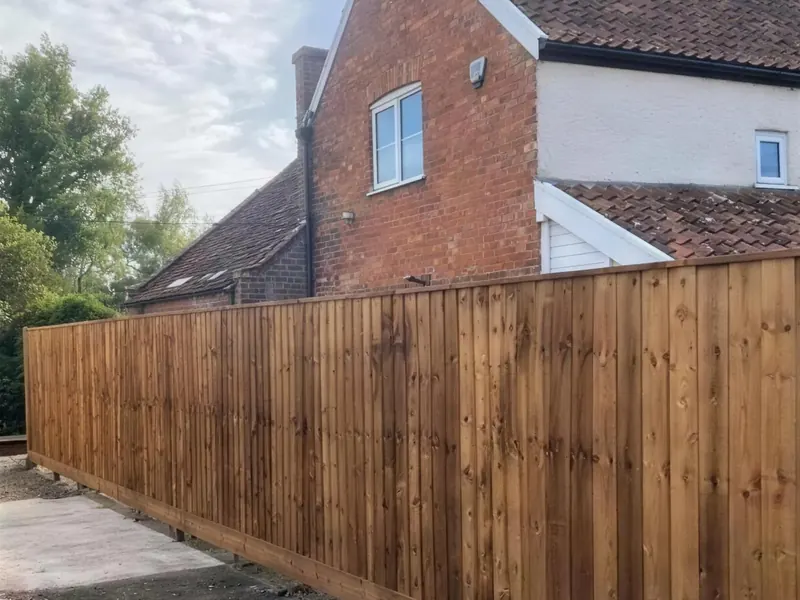
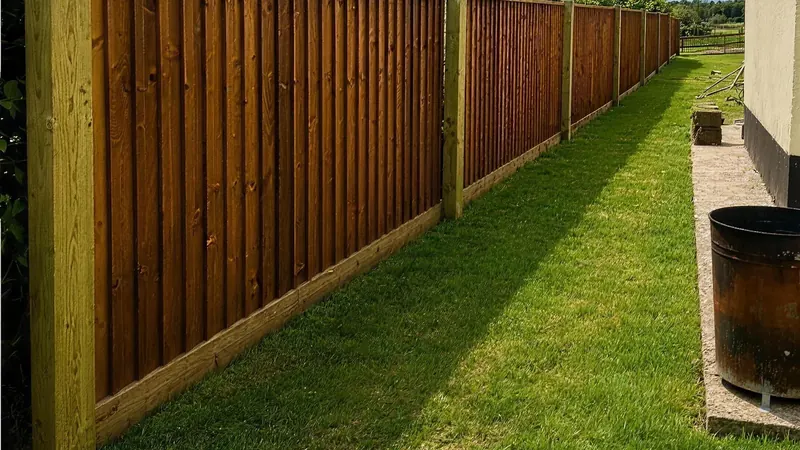
Post and rail copes best because the wind passes straight through it. Of the solid fences, closeboard is the stronger, since each board is fixed to rails running between the posts. Lightweight lap panels are the most likely to blow out on an exposed site. For privacy in a windy spot, closeboard on sound posts is the better choice.
| Fence type | How it handles wind | Where it suits |
|---|---|---|
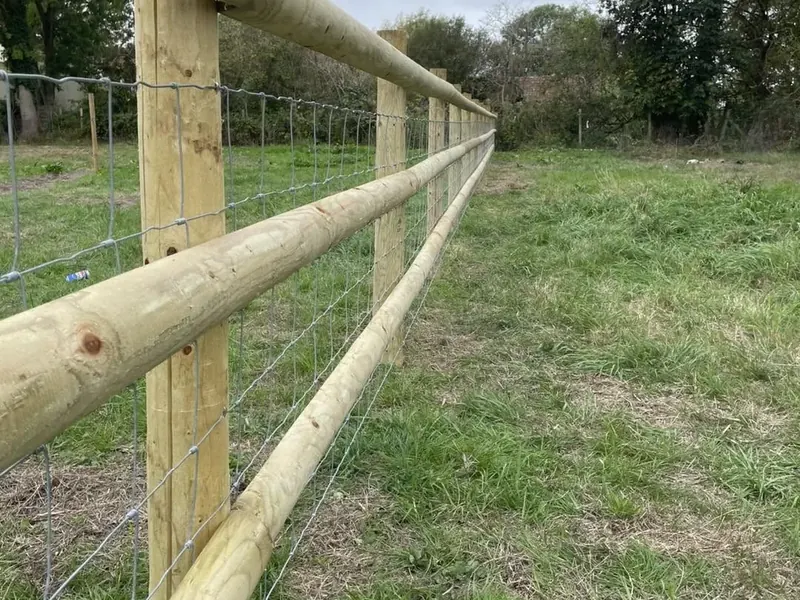
| Post and rail (with or without stock wire) | Almost open, so the wind passes through and the posts carry little load | Fields, paddocks and boundaries on open or exposed ground where privacy is not the point |
| Closeboard (featheredge boards on rails) | Solid, so it catches the full wind, but it is built as one run with each board fixed to the rails | Gardens that need privacy, including fairly exposed ones, if the posts are sound and well set |
| Lap or overlap panels | Solid and light; panels can lift out of their slots or split at the fixings | Sheltered gardens; a weak point on open, windy sites |
A solid fence on an exposed site asks its posts to hold back the full force of every gust, so the posts matter more than the boards. Post depth, spacing and setting depend on the ground and the exposure, and are for whoever puts the fence up to judge. On very open ground, a fence that lets some wind through, or a lower solid one, will usually outlast a tall solid fence.
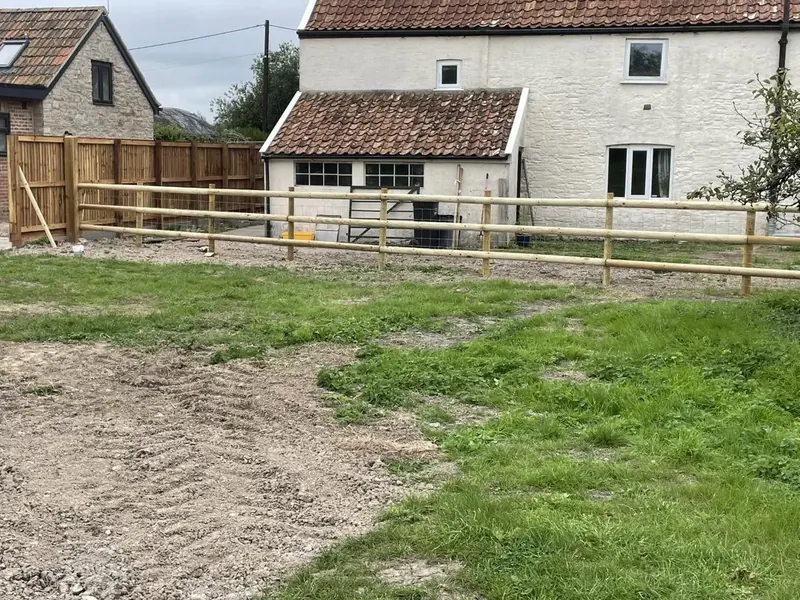
We put up closeboard privacy fencing and post and rail fencing, with half-round rails and stock wire where animals need keeping in, and field gates, including a 12 ft gate on one recent job. Another, at Mark, was 50 m of post and half-round rail with stock wire.
What should you do during a storm and straight after it?
Stay away from fences, walls and trees while the wind is up, and do not go out to prop a fence mid-storm. Once it has passed, look from a safe distance before you touch anything. A fence that has moved can drop with very little warning, especially once the ground underneath is waterlogged.
If you do go outside, try not to walk or shelter close to buildings, fences, boundary walls and trees.
The same page says to secure loose objects such as ladders, trampolines and garden furniture beforehand, and the Met Office gives the same advice. Things blowing around in a gale break plenty of fences.
- Keep children, dogs and livestock away from a damaged or leaning stretch until it is made safe.
- If a fence has come down near a road, a footpath or electricity cables, keep well clear. Call 999 if anyone is in immediate danger.
- If a tree or a large branch has come down on the fence, call a qualified tree surgeon to make it safe first.
- Photograph the damage before anything is moved, in case an insurer or neighbour needs it.
Is it time to replace the fence rather than keep fixing it?
If most of the posts are soft at the base, the fence leans along its length, or it has come down in more than one storm, replacing it usually makes more sense than patching it. A new post among rotten ones just moves the weak point along.
We put up new fences and gates. If your fence is sound apart from a loose board or two, ring or WhatsApp and tell us about it and we will give you a straight answer. If the whole run is tired, a new fence suited to the exposure of your site is the longer-lasting answer, and winter is a good time to plan it.
The cost of a new fence depends mostly on the length of the run, the type and height of fence, how easy the ground is to dig, access for materials, and whether an old fence has to come down first. We give free, no-obligation quotes, emailed or given on the day after a look at the site.
Questions people also ask
Why do fence posts snap at ground level?
That is where the wind load concentrates and where the timber stays wettest, so rot starts there. On wet clay the ground can stay damp for most of the winter. A post can look fine above ground while its base has gone soft.
When should I check my fence before winter?
In autumn or early winter, on a calm, dry day before the November to March gale season gets going. Check again after every big storm, starting with the stretch that faces the south-west or west.
Can you help with a storm-damaged fence?
We put up new closeboard and post and rail fences and gates, so if a fence needs replacing we can give you a free quote. For anything smaller, ring or WhatsApp and tell us about it.
A tree has fallen on my fence. Can you help?
Have a qualified tree surgeon make it safe first. Once the tree has been dealt with, if the fence needs replacing, we can give you a free quote.
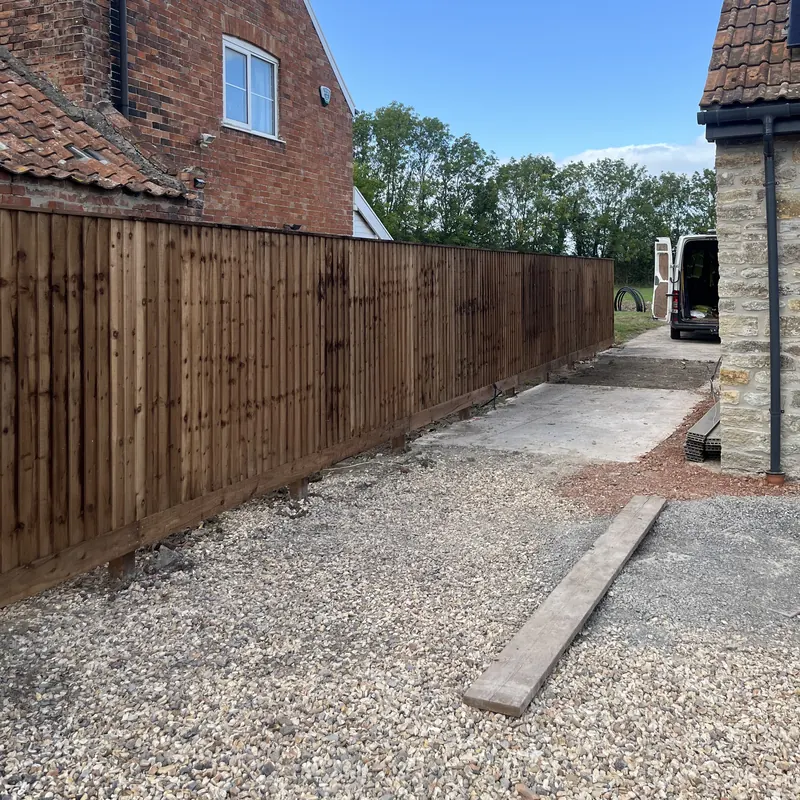
Fencing from a family business near Axbridge
If your fence is past saving, we put up closeboard and post and rail fencing around Axbridge and further across Somerset, with a free quote emailed or given on the day.
Burnham-on-Sea takes the wind straight off the coast. More on fencing and garden work in Burnham-on-Sea.
Sources
- Met Office: Climate of South West England (factsheet 7), accessed 23 October 2026
- GOV.UK Prepare: Storms, accessed 23 October 2026
- Met Office: 5 tips for staying safe in strong wind, accessed 23 October 2026
Rules and wildlife law are quoted from the official pages above. This guide is general advice; check the source for your own situation.