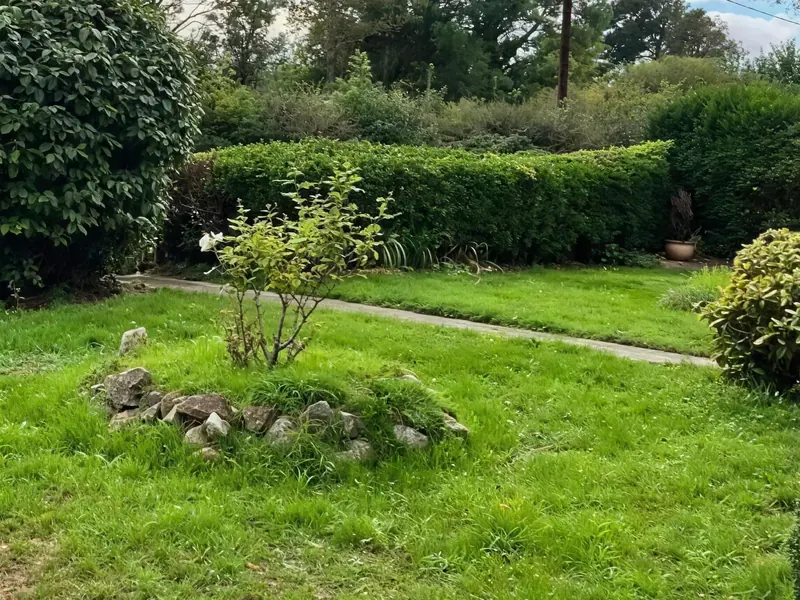
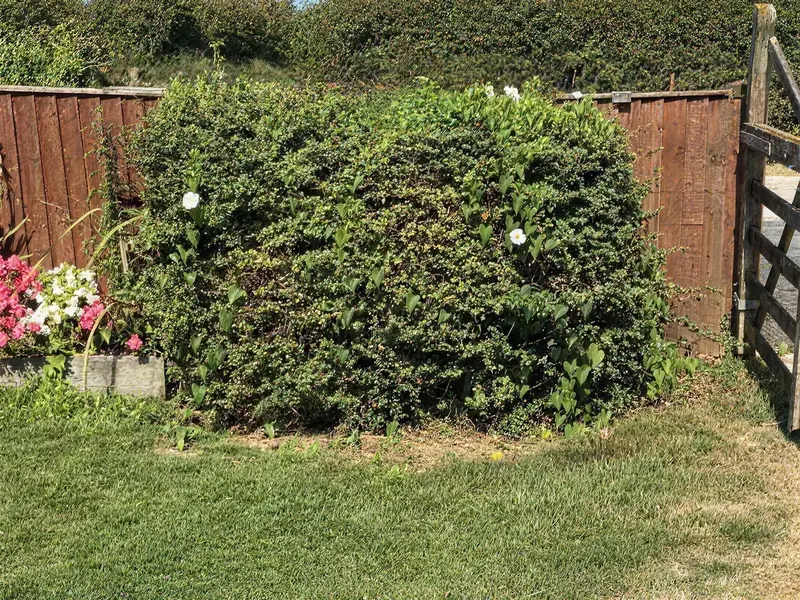
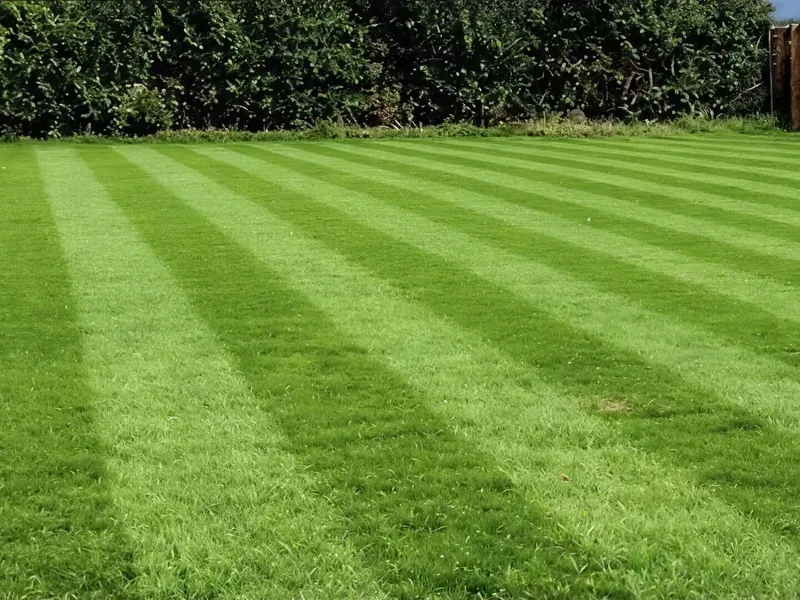
Is winter a good time to clear an overgrown garden?
Yes. Between November and February most growth has died back and the main bird nesting season, which runs from March to September, has not started. You can see what you are clearing and you are less likely to disturb a nest. Leave some leaves and a log pile for wildlife, and decide where the cuttings will go before work starts.
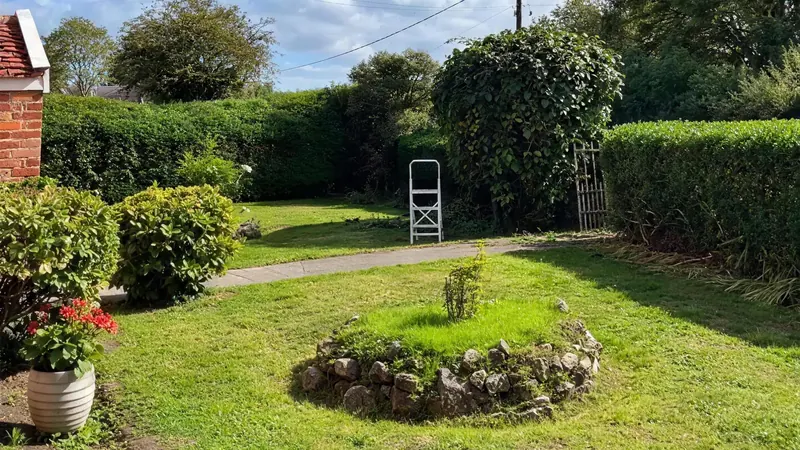
Why is winter a good time to clear an overgrown garden?
Winter clearance works because the garden is at its most visible and its quietest. Once the leaves have dropped and brambles and nettles have died back, you can see boundaries, old fences and the shape of the ground. Most birds have not started nesting, and a cleared garden has time to settle before the spring growth.
In summer an overgrown corner hides a lot: bramble over old wire, ivy over posts, nettles over uneven ground. By December most of that soft growth has gone back, so whoever is clearing can see what is underneath and plan the job rather than finding out halfway through.
Timing matters for birds too. The RSPB describes March to September as the main nesting season and recommends cutting hedges and other vegetation between 1 September and 28 February. Somerset Council's guidance also strongly recommends doing vegetation work outside the nesting season.
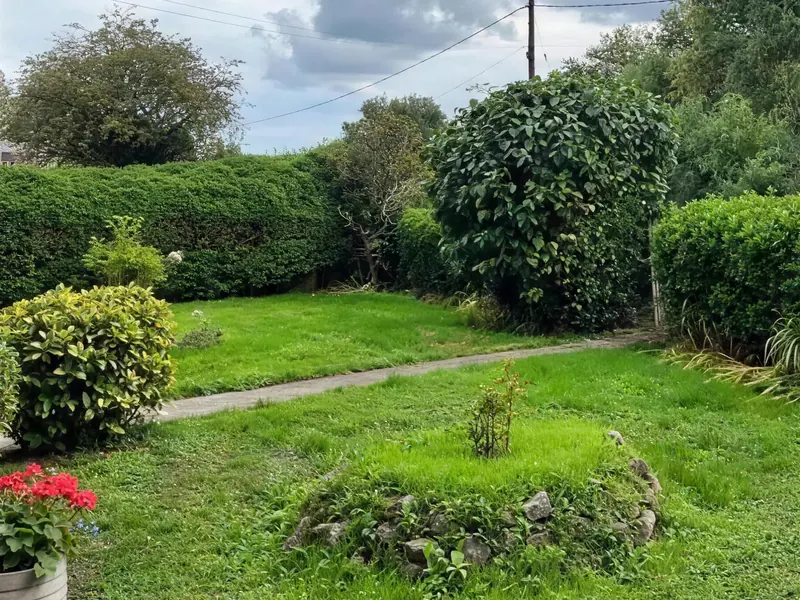
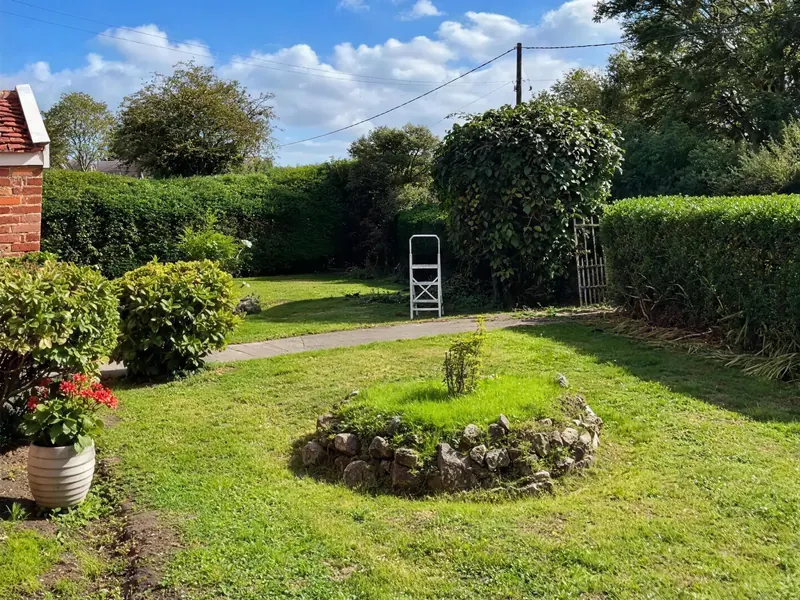
One of our garden tidy-ups: long grass and shaggy edges before, cut and tidied after.
Is it legal to clear a garden in winter if birds are about?
Yes, clearing a garden is legal at any time of year, but damaging an active nest is not. Under the Wildlife and Countryside Act 1981 a nest is protected while it is in use or being built, whatever the month. Some birds start early in January or February, so look before you cut.
It is an offence under Section 1 of the Wildlife and Countryside Act of 1981 to intentionally take, damage or destroy the nest of any wild bird while it is in use or being built ...
Legally, however, you can cut vegetation year-round, as long as no active nests are moved or damaged.
The RSPB suggests three checks before cutting, and they work just as well for a clearance:
- Watch the area for a few days. Birds going in and out all day is the sign of a nest; birds that only arrive at dusk are probably just roosting.
- Look through the hedge, shrub or bramble thicket before cutting it.
- Use hand tools near anything you are unsure about, because they are easier to stop.
Somerset Council asks anyone who sees nesting birds being disturbed to call Avon and Somerset Police on 101 and ask for the Wildlife Crime Officer.
What should you leave for wildlife when you clear a garden?
Clearing an overgrown patch doesn't mean stripping the whole garden bare. The RSPB's winter advice is to leave leaf litter under hedges and shrubs, keep some seed heads standing, and stack larger branches into a log pile. These give insects, birds and hedgehogs shelter and food through the cold months.
Leaf piles also create great habitat for hibernating insects, which are great for birds, too.
- Leaves: rake them off the lawn and sweep them under hedges and shrubs rather than bagging them all.
- Seed heads: teasels, grasses and similar stems feed goldfinches and sparrows.
- Wood: stack larger branches in a corner. The RSPB says robins and blackbirds may even nest in a log pile in spring.
- Ivy: the RSPB rates its late flowers, berries and evergreen cover highly. Cut it off fences and paths if you need to, but leave some.
Hedgehogs are the main thing to watch for in a winter clearance. They shelter in leaf and wood piles, so check long grass, bramble bases and old heaps by hand before strimming or moving them.
What do you do with the cuttings after a garden clearance?
A clearance in Somerset leaves a lot of green waste, and burning it is not the answer. You can compost it on site, use Somerset Council's fortnightly garden waste collection, take it to one of the county's recycling sites, or pay a registered waste carrier to take it. Decide which before the job starts.
| Option | What to know |
|---|---|
| Compost or log pile on site | Soft growth composts; woody stems and branches can go on a wildlife log pile. It keeps the material in the garden. |
| Somerset Council garden waste collection | A subscription bin or sacks, collected fortnightly all year apart from a short Christmas break. Fine for a trickle, slow for a big clearance. |
| Somerset recycling sites | The council says garden waste can go to any of Somerset's 16 recycling sites. Useful if you have a car or trailer and a few loads. |
| A private waste carrier | Anyone you pay to take your waste away must be registered. Check before they load anything (see below). |
You cannot get rid of household waste if it will cause pollution or harm people's health. This includes burning it.
If you engage a private business (for example, skip hire, house clearance) to take away your waste rather than the local authority, in order to meet your duty of care you should check that they are an authorised carrier with up to date and valid upper tier registration.
The same code says a carrier's registration number starts with CBDU, and you can look it up on the Environment Agency's public register by number, business name or postcode.
How does wet winter ground in Somerset change a clearance job?
Wet ground is the main limit on winter clearance in Somerset. Heavy clay on the Levels around Wedmore, Mark and Rooksbridge holds water for weeks after rain, and boots and barrows churn it into ruts. On Mendip-edge gardens the slopes get slippery. Pick drier spells and keep heavy loads off soft lawns.
None of this stops a clearance; it changes the order of work. Cutting back can go ahead in most weather. Moving cut material across a sodden lawn is what does the damage, so stack cuttings near where they were cut and move them once the ground firms up.
What should you ask a garden clearance contractor?
Before booking a clearance, ask what is included, where the cuttings will go, whether the contractor is insured, and how they handle nests and wildlife. If they offer to remove the waste, ask for their waste carrier number. If the job involves trees, ask whether that is work they actually do.
| Ask | Why it matters |
|---|---|
| Is the quote free, and what does it cover? | Clearance can mean cutting back, or cutting back and removing everything. Get it by email so both sides agree. |
| Where will the cuttings go? | Composted on site, left stacked, or taken away. Each changes the job. |
| If you remove waste, what is your waste carrier number? | It should start CBDU and show as upper tier on the Environment Agency register. Defra's code puts the duty on you to check. |
| Are you insured? | Public liability cover protects you if something is damaged during the work. |
| Will you check for nests and hedgehogs first? | A nest in use is protected all year, and hedgehogs shelter in exactly the places a clearance cuts into. |
| What about trees in an overgrown garden? | Felling a tree or taking off a big limb is a job for a tree surgeon. |
What affects the cost of a clearance is mostly the size of the area, how dense and woody the growth is, how easy the access is, and what happens to the cuttings afterwards. Photos of the whole area, with a gate or path for scale, help.
Japanese knotweed needs its own note. Government guidance says a new plant can grow from a piece of root as small as 1cm, and that you can be prosecuted for causing it to spread into the wild. If you think you have it, don't strim or dig it; the same guidance says to use a specialist.
Questions people also ask
What is the latest you should clear an overgrown garden before spring?
Aim to finish by the end of February, when the RSPB's recommended cutting window closes. Keep checking for nests before then, because some birds start early.
Do you take the garden waste away after a clearance?
No. We leave the site tidy, but we don't take the cuttings away. Cuttings can be composted or stacked on site, go in your council garden waste bin, or go to a Somerset recycling site, and it is worth agreeing which before we start.
Can you clear a garden that has trees in it?
We clear overgrown areas and trim overgrown bushes and shrubs, and we can work around trees. If a tree needs felling or cutting back hard, a qualified tree surgeon is the safe choice; ask us and we will talk it through.
Can you quote for a garden clearance from photos?
Often, yes. Garden jobs can usually be quoted from photos first, and quotes are free, emailed or given on the day. Send a few pictures by WhatsApp to 07594 230584.
Which areas do you cover for garden clearance?
We cover about 10 to 15 miles around Axbridge for garden work, which takes in places such as Cheddar and Wedmore. We are a family business based near Axbridge.
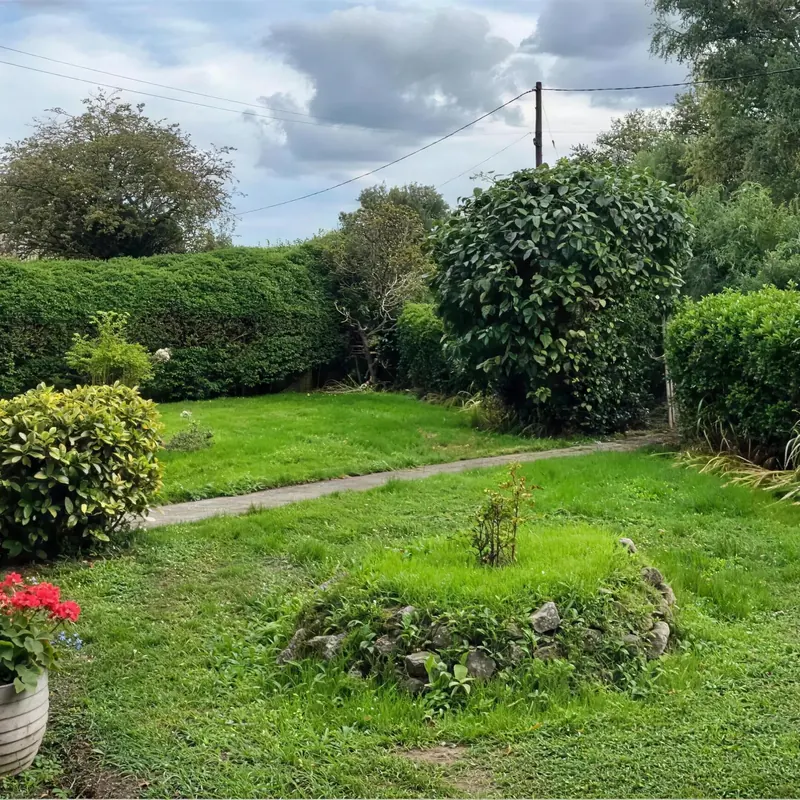
Garden clearance from a family business near Axbridge
We clear overgrown gardens around Axbridge, Cheddar and Wedmore and leave the site tidy; send us a few photos for a free quote.
We clear and tidy gardens in and around Wells. More on fencing and garden work in Wells.
Sources
- Somerset Council: Bird nesting season guidance, accessed 23 October 2026
- RSPB: Top tips to help nesting birds, accessed 23 October 2026
- RSPB: What to do for nature this winter, accessed 23 October 2026
- RSPB: Less is more this autumn, accessed 23 October 2026
- RSPB: Leave seedheads standing, accessed 23 October 2026
- GOV.UK: Garden bonfires: the rules, accessed 23 October 2026
- Defra: Waste duty of care code of practice (section 5, occupiers of domestic property), accessed 23 October 2026
- Somerset Council: Save time and sign up for a garden waste recycling collection, accessed 23 October 2026
- Environment Agency, Defra and Natural England: How to stop Japanese knotweed from spreading, accessed 23 October 2026
Rules and wildlife law are quoted from the official pages above. This guide is general advice; check the source for your own situation.